
Let me ask you a question: if Instagram disappeared tomorrow, how would you reach your audience?
If that question makes you uncomfortable, you're not alone. Most personal trainers have built their entire marketing on rented land — platforms they don't own, algorithms they can't control, and followers who may never see their content.
Email marketing changes that equation entirely. When someone gives you their email address, they're giving you direct access. No algorithm. No pay-to-play. Just you, landing in their inbox, building trust one message at a time.

Why Email Marketing Crushes Social Media for Personal Trainers
Here are the numbers that should make you rethink everything. According to Litmus research, email consistently delivers the highest return of any digital channel:
- Email marketing ROI is $36 for every $1 spent — the highest of any marketing channel (Litmus, 2023)
- The average email open rate across industries is 21%. For fitness and wellness? It's closer to 25-30% when done right (Mailchimp Benchmarks)
- Only 2-5% of your social media followers see any given post. Email? Your message lands directly in their inbox
- 60% of consumers say email marketing influences their purchase decisions (HubSpot)
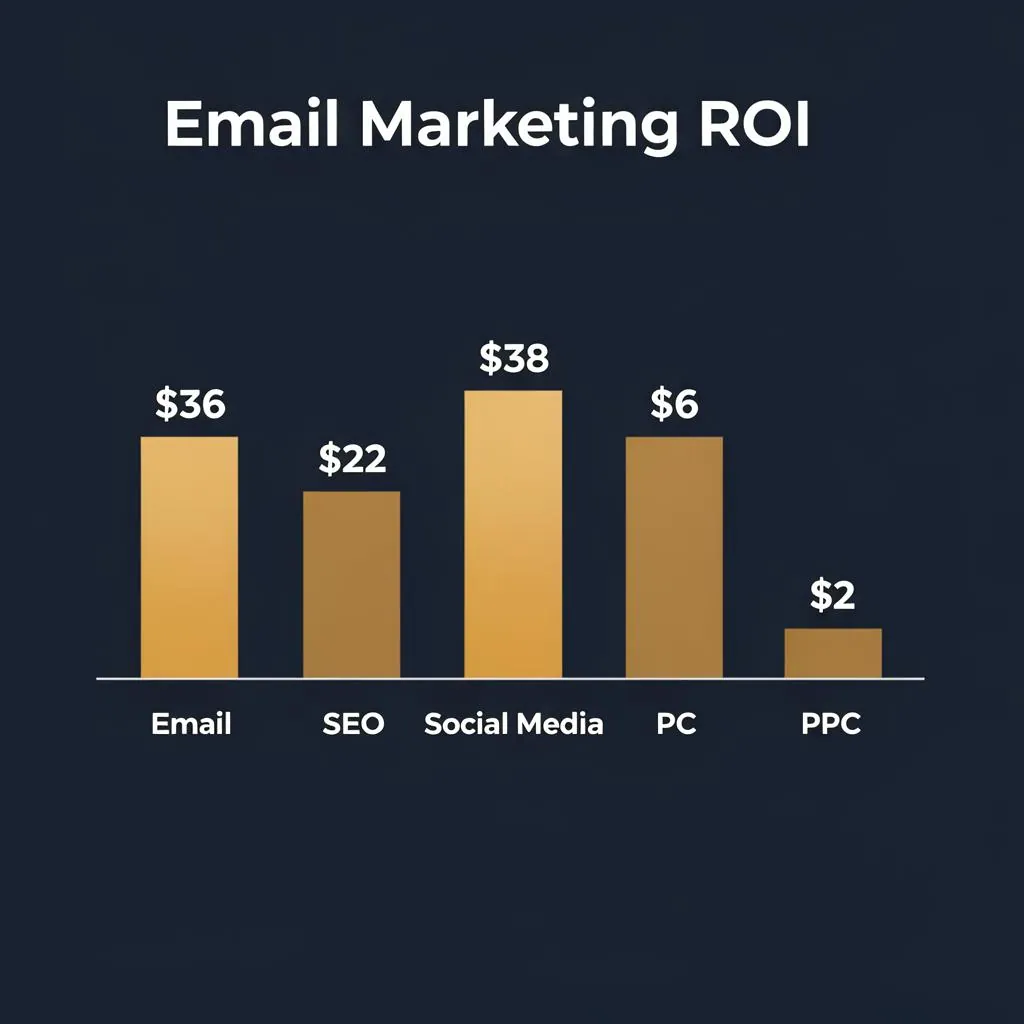
Social media is great for awareness. But email is where trust is built and decisions are made. Think of social media as the handshake. Email is the conversation.
Step 1: Create a Lead Magnet That Actually Works
Nobody gives you their email address for nothing. You need to offer something valuable enough that they willingly trade their contact info for it. This is called a lead magnet — and as OptinMonster's research shows, the right lead magnet can boost opt-in rates by over 50%.
Here's what works for personal trainers:
- A free 7-day workout plan — tailored to your niche (e.g., "7-Day Fat Loss Kickstart for Busy Professionals")
- A nutrition quick-start guide — simple, actionable, not a 40-page textbook
- A fitness assessment checklist — "Are You Making These 5 Training Mistakes?"
- A video training series — 3 short videos teaching one specific skill
- A results calculator — "See What 90 Days of Consistent Training Could Look Like"
The key: your lead magnet should solve a small, specific problem for your ideal client. Don't try to give away everything. Give them one quick win that makes them think, "If this is the free stuff, what would working with this trainer be like?"
Step 2: Set Up Your Opt-In System
Your lead magnet is useless if nobody can find it. You need opt-in points everywhere your ideal clients spend time:
On Your Website
This is the most important one. Your coaching website should have:
- A pop-up or banner offering your lead magnet on the homepage
- A dedicated landing page just for the lead magnet (this is what you link to from social media)
- An opt-in form in your blog sidebar or footer
- A lead magnet mention on your About page
If you don't have a professional coaching website yet, TrainSpace builds one for you — for free. It comes with opt-in forms and lead capture already built in.
On Social Media
- Put the link to your landing page in your bio on every platform
- Create posts that tease the lead magnet content: "I put together a free 7-day plan — link in bio"
- Use Instagram Stories with a direct link sticker
- Pin a post about your lead magnet to the top of your profile
In Person
- QR code on your business card linking to the opt-in page
- QR code displayed at your training space or gym
- "Text FITNESS to [your number]" at events, workshops, or partner locations
Step 3: Build a Welcome Sequence That Converts
This is where most trainers drop the ball. Someone signs up for your lead magnet and then... nothing. Radio silence until you remember to send something weeks later. By then, they've forgotten who you are.
You need an automated welcome sequence — a series of 5-7 emails that go out automatically over 2 weeks after someone subscribes. Research from Campaign Monitor shows that welcome emails generate 4x the open rates and 5x the click rates of standard emails. Here's a proven framework:
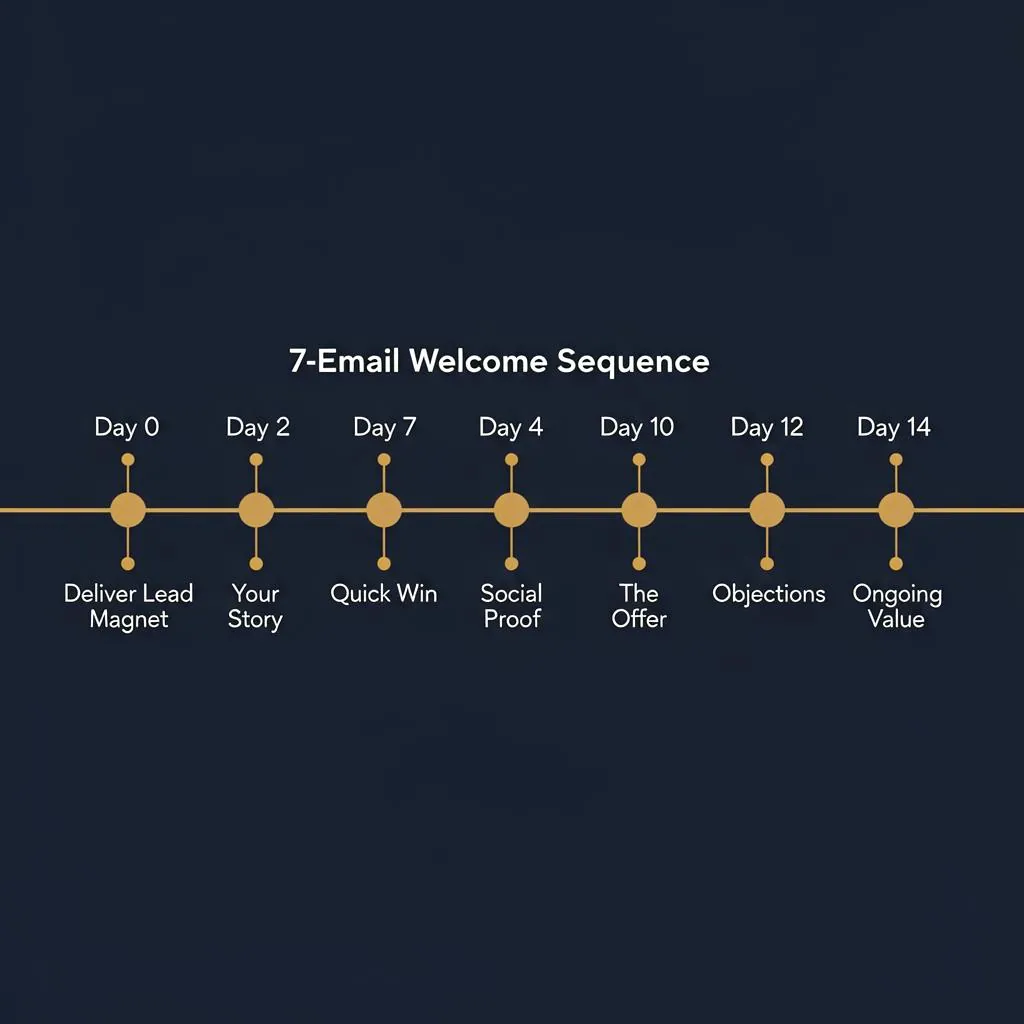
Email 1 (Immediately): Deliver + Introduce
Deliver the lead magnet. Introduce yourself briefly. Tell them what to expect from your emails. Keep it short and warm.
"Hey [Name], here's your 7-Day Fat Loss Kickstart! I'm Cameron — I help trainers build businesses they love. Over the next week or so, I'll share some of my best tips. Talk soon!"
Email 2 (Day 2): Share Your Story
Tell them why you became a trainer. Be real. Be vulnerable. This is where connection happens. People hire people they relate to.
Email 3 (Day 4): Deliver a Quick Win
Share one actionable tip they can use today. A workout hack, a nutrition swap, a mindset shift. Make them think, "This trainer actually knows their stuff."
Email 4 (Day 7): Social Proof
Share a client transformation story. Before and after results. A testimonial. Real proof that your training works. This builds trust faster than anything you could say about yourself.
Email 5 (Day 10): The Offer
Invite them to book a free consultation or discovery call. Make it easy — one link, one click. Frame it as a next step, not a sales pitch: "If you want to see results like [client name], let's chat about what that looks like for you."
Email 6 (Day 12): Overcome Objections
Address the most common reasons people don't sign up: cost, time, fear of commitment. Be direct and empathetic. This is where your objection handling skills shine.
Email 7 (Day 14): Final CTA + Ongoing Value
One more invitation to book a call. Then let them know you'll keep sending valuable weekly emails. This transitions them from the welcome sequence to your ongoing newsletter.
Step 4: Send a Weekly Email That People Actually Open
After the welcome sequence, you send one email per week. That's it. Not daily. Not randomly. Weekly, on the same day, consistently.
Here's a simple formula for every weekly email:
- One valuable tip or lesson (80% of the email)
- One client win or story (builds ongoing social proof)
- One call to action (book a call, join a challenge, reply with a question)
Subject lines matter. A lot. Here are frameworks that work:
- Curiosity: "The one exercise I stopped programming (and why)"
- Benefit: "How to lose 10 lbs without giving up carbs"
- Story: "My client Sarah just hit a PR she never thought possible"
- Urgency: "Only 3 spots left for January coaching"
Step 5: Automate Everything
The beauty of email marketing is that most of it runs on autopilot. Once your welcome sequence is written, it sends itself to every new subscriber forever. Your weekly email is the only thing you actively write.
TrainSpace's automation tools handle all of this — lead follow-up, drip sequences, and appointment booking — so you're not spending hours every week on email. You write it once, the system does the rest.
Here's what to automate:
- Welcome sequence — set it and forget it
- Abandoned consultation follow-up — if someone clicks your booking link but doesn't book, send a reminder
- Re-engagement sequence — if someone hasn't opened your emails in 60 days, send a "still interested?" series
- Birthday emails — a personal touch that takes zero effort once set up
- Post-consultation follow-up — automatic "great chatting with you" email after every discovery call
Common Mistakes to Avoid
I see trainers make the same email marketing mistakes over and over:
- Only emailing when you want something. If every email is "buy my program," people unsubscribe. Lead with value, always.
- Being boring. Write like you talk. Be conversational. Use stories. Nobody wants to read a textbook.
- Not emailing at all. The biggest mistake is having an email list and never using it. Consistency beats perfection.
- Making it about you. Every email should answer one question from the reader's perspective: "What's in it for me?"
- Ignoring mobile. Over 60% of emails are read on phones. Keep paragraphs short. Use clear buttons for CTAs.
How Many Subscribers Do You Actually Need?
Here's the math that should motivate you. According to GetResponse's industry benchmarks, fitness professionals see above-average engagement when they focus on list quality over quantity:
- Let's say you have 200 email subscribers
- Your average open rate is 25% = 50 people read your email
- Your click-through rate is 5% = 10 people click your booking link
- Your consultation-to-client conversion is 50% = 5 new clients
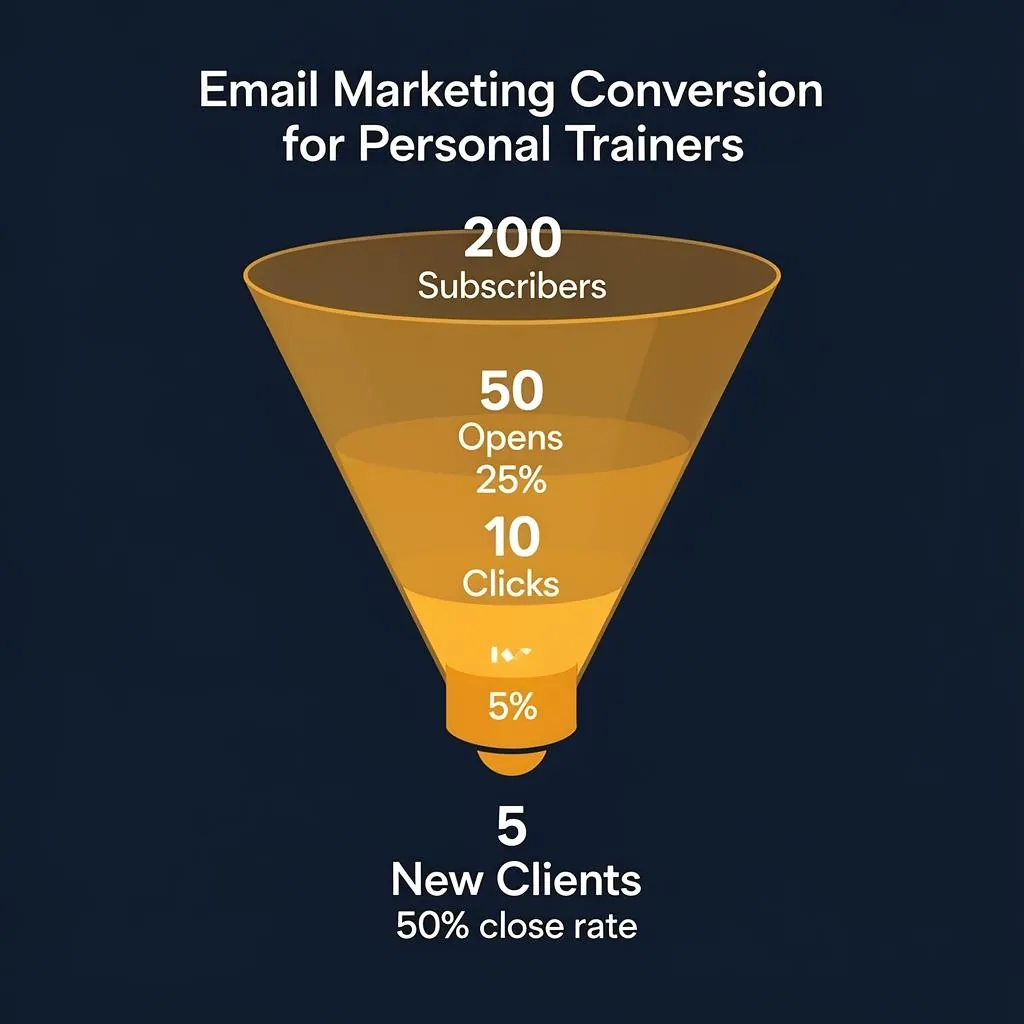
Five new clients from one email. And you only needed 200 subscribers to get there. You don't need 10,000 followers. You don't need to go viral. You need a small, engaged list of people who actually want to hear from you.
Start Building Your List This Week
Here's your action plan:
- Today: Decide on your lead magnet topic. What's a quick win you can give your ideal client?
- This week: Create the lead magnet. It doesn't have to be perfect — a Google Doc turned into a PDF works fine.
- Next week: Set up your opt-in page and connect it to an email tool. Add the link to your social media bios.
- Week 3: Write your 5-7 email welcome sequence and automate it.
- Ongoing: Send one valuable email every week. Same day. Same time. Don't overthink it.
In 30 days, you'll have a system that generates leads and books consultations while you sleep. That's not hype — that's email marketing.
Get Your Free Coaching Website with Built-In Lead Capture →
Read: How to Build an AI Marketing Funnel →
Explore Free Courses in Exercise Professionals Academy at TrainSpace →