Why Local SEO Is the #1 Untapped Growth Channel for Personal Trainers
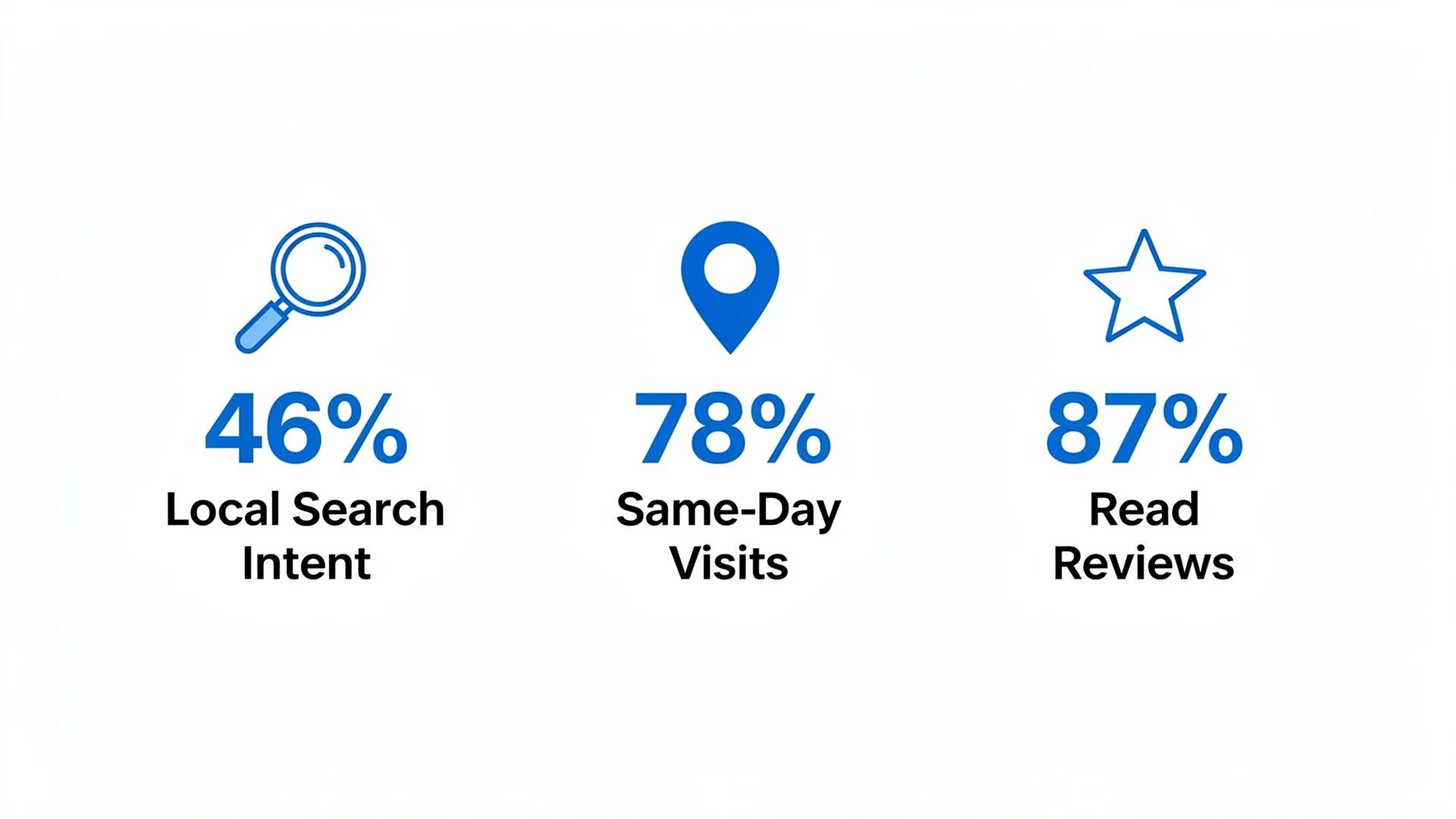
Here's a stat that should stop you in your tracks: 46% of all Google searches have local intent (Search Engine Journal). That means nearly half of everyone searching Google right now is looking for something near them. And when someone types "personal trainer near me" or "best gym in [your city]," they're not browsing. They're ready to buy.
Yet most personal trainers pour their energy into Instagram posts that reach 200 people, while ignoring the platform that delivers high-intent buyers directly to their door. Social media is rented attention. Google is owned real estate.
What Is Local SEO and Why Should Trainers Care?
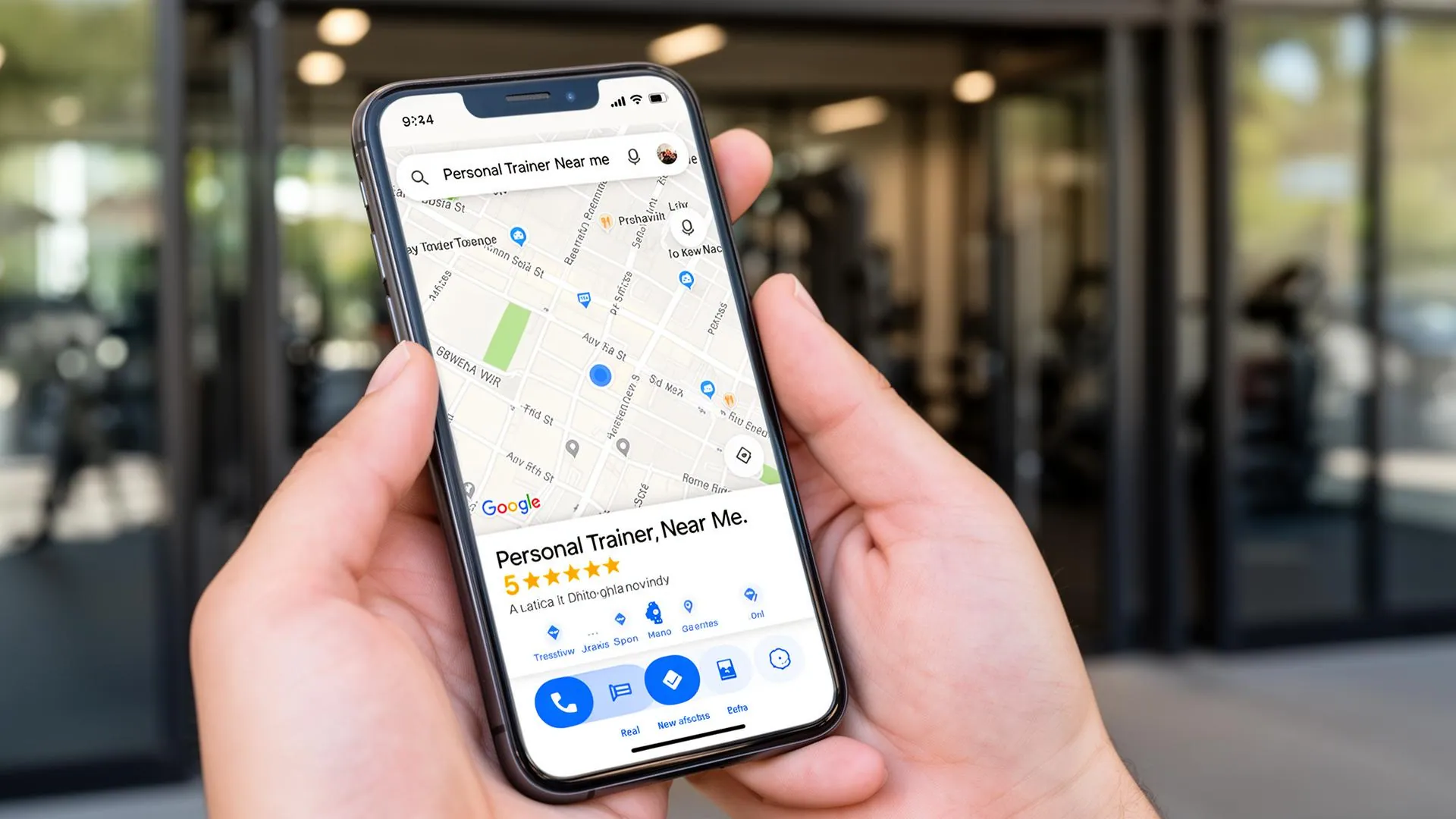
Local SEO (Search Engine Optimization) is the practice of optimizing your online presence so you appear in location-based search results. The most valuable spot on Google for any local business is the "Map Pack" — those three businesses that appear with a map at the top of search results.
Think about it: when was the last time you scrolled past those three results to click on page two? Exactly. The Map Pack gets 42% of all clicks for local searches. If you're not in those three spots, you're essentially invisible to the people most likely to become your clients.
The beautiful part? You don't need to pay for ads to get there. Google ranks local businesses based on relevance, distance, and prominence — all things you can control for free.
Step 1: Claim and Optimize Your Google Business Profile
Your Google Business Profile (GBP) — formerly Google My Business — is the single most important asset in your local SEO strategy. It's what shows up in the Map Pack, and it's completely free.
How to Set It Up Right
- Claim your profile at business.google.com. If you train at a gym, you can still create a profile as a "service area business."
- Choose the right category. Your primary category should be "Personal Trainer." Add secondary categories like "Fitness Center," "Weight Loss Service," or "Sports Coach" if relevant.
- Complete every single field. Google rewards completeness. Fill out your business name, address, phone number, website, hours, services, and business description.
- Write a keyword-rich description. Example: "John Smith is a certified personal trainer in Austin, TX specializing in weight loss and strength training for busy professionals. Offering in-person and online personal training programs."
- Add high-quality photos. Profiles with photos get 42% more requests for directions and 35% more clicks to websites (Google). Upload photos of you training clients, your facility, and before/after transformations (with permission).
Pro Tip: Add new photos every single week. Google loves fresh content on your profile. Set a weekly reminder to upload 2-3 new training photos.
Step 2: Master the NAP Consistency Game
NAP stands for Name, Address, Phone number. Google cross-references your NAP data across the entire internet to verify you're a legitimate business. If your name is "John Smith Personal Training" on Google but "John Smith Fitness" on Yelp, Google gets confused — and confused Google means lower rankings.
Where Your NAP Needs to Match Exactly
- Google Business Profile
- Your website (header, footer, and contact page)
- Facebook business page
- Instagram bio
- Yelp
- Apple Maps
- Any gym directory or fitness listing you're on
Use the exact same format everywhere. If your GBP says "123 Main St, Suite 4," don't write "123 Main Street #4" somewhere else. Consistency is king.
Step 3: Build a Review Machine
Reviews are the rocket fuel of local SEO. According to BrightLocal's research, 87% of consumers read online reviews for local businesses, and businesses in the top 3 Map Pack positions average 47 reviews.
You need a system, not a hope-and-pray approach.
The 5-Star Review System for Trainers
- Ask at the right moment. The best time to ask for a review is right after a client hits a milestone — a new PR, a weight loss goal, or after they say something positive about their experience.
- Make it stupidly easy. Create a direct link to your Google review page and save it in your phone. Text it to clients with a message like: "Hey [Name], so proud of your progress! Would you mind leaving a quick Google review? It helps other people like you find me. Here's the link: [link]"
- Respond to every review. Thank people by name. Mention specific details. Google sees active engagement as a ranking signal.
- Never fake it. Google's algorithm is incredibly sophisticated at detecting fake reviews. One flagged fake review can tank your entire profile.
- Aim for consistency. 2-3 new reviews per month is better than 20 reviews in one week then silence for six months. Google values recency.
Step 4: Build Local Citations
Citations are mentions of your business on other websites. They tell Google, "This business is real and established in this area." The more quality citations you have, the more authority Google gives you.
Top Free Citation Sources for Personal Trainers
- General directories: Yelp, Yellow Pages, BBB, Foursquare, Apple Maps
- Fitness-specific: IDEA Fitness, ACE Pro Finder, NASM trainer locator
- Local directories: Your city's Chamber of Commerce, local business directories, community websites
- Social profiles: Facebook, LinkedIn, Instagram (yes, these count as citations)
Spend one afternoon creating profiles on the top 15-20 directories. Use the exact same NAP info everywhere. This alone can push you into the Map Pack within 30-60 days.
Step 5: Optimize Your Website for Local Search
Your Google Business Profile gets you into the Map Pack. Your website gets you into the regular organic results below it — and it reinforces your Map Pack ranking. Double the visibility.
Essential On-Page Local SEO for Trainers
- Title tags: Include your city. Example: "Personal Trainer in Austin TX | John Smith Fitness"
- H1 heading: "Austin's Top-Rated Personal Trainer" or "Personal Training in [Your City]"
- Location pages: If you serve multiple areas, create a page for each: "/personal-trainer-austin," "/personal-trainer-round-rock"
- Schema markup: Add LocalBusiness JSON-LD to your site. This tells Google exactly what your business is, where it is, and what services you offer.
- Mobile speed: Over 60% of local searches happen on mobile. If your site takes more than 3 seconds to load, you're losing both rankings and clients.
- Embed a Google Map on your contact page showing your training location.
TrainSpace Advantage: Every website we build at Dynasty 2-Day Launch is already optimized for local SEO — fast loading, mobile-first, with proper schema markup and location targeting baked in from day one.
Step 6: Create Local Content That Google Loves
Google rewards websites that publish relevant, location-specific content. This is where most trainers completely miss the boat.
Local Content Ideas for Trainers
- "Best Parks for Outdoor Workouts in [Your City]"
- "5 Healthy Restaurants in [Your City] for Meal Prep"
- "[Your City] Fitness Events Calendar 2026"
- "Client Spotlight: How [Client Name] Lost 30 Pounds in [Your City]"
- "Why [Your City] Residents Need a Personal Trainer (Local Health Data)"
Each piece of content is a new opportunity to rank for a local keyword. Over time, this builds a web of local relevance that makes Google see you as the authority for fitness in your area.
Step 7: Track Your Progress
You can't improve what you don't measure. Here are the free tools you need:
- Google Business Profile Insights: Shows how many people found you, what they searched, and what actions they took.
- Google Search Console: Shows which keywords your website ranks for and how many clicks you're getting.
- Google Analytics: Shows how much traffic your website gets and where it comes from.
Check these monthly. Watch for trends. If a particular keyword is driving traffic, create more content around it. If a service page isn't ranking, optimize it.
The 30-Day Local SEO Action Plan
| Week | Action | Time Required |
|---|---|---|
| Week 1 | Claim & fully optimize Google Business Profile | 2 hours |
| Week 1 | Audit and fix NAP consistency across all platforms | 1 hour |
| Week 2 | Create profiles on top 15 citation directories | 3 hours |
| Week 2 | Ask your 5 best clients for Google reviews | 30 min |
| Week 3 | Optimize website title tags, H1s, and add schema | 2 hours |
| Week 3 | Publish first local content piece | 2 hours |
| Week 4 | Add fresh photos to GBP, request 2 more reviews | 30 min |
| Week 4 | Set up Google Search Console & Analytics | 1 hour |
Total time investment: roughly 12 hours over 30 days. That's less than most trainers spend scrolling Instagram in a week. And the ROI? Clients finding you for free, every single month, for years to come.
Stop Being Invisible. Start Being Found.
Your dream clients are searching for you right now. They're typing "personal trainer near me" into Google, and they're hiring whoever shows up first. The question is: will that be you, or will it be the trainer down the street who figured this out first?
Local SEO isn't complicated. It's not expensive. It just requires knowing the system and doing the work. And now you know the system.
If the idea of optimizing your website, setting up schema markup, and building citation profiles sounds overwhelming, that's exactly what we do at Dynasty 2-Day Launch. In 48 hours, we build your entire online presence — website, SEO, funnels, and all — so you can focus on what you do best: training clients.