
The Pricing Crisis in Personal Training
According to Zippia, the average personal trainer in the U.S. earns $25.20 per hour. That's less than many retail managers. And it's not because trainers lack skill — it's because they don't know how to price their services for profitability.
Here's the root problem: most trainers price based on what the gym down the street charges, not based on the value they deliver. They race to the bottom, competing on price instead of results. It's a losing game.
Why Per-Session Pricing Is Killing Your Business
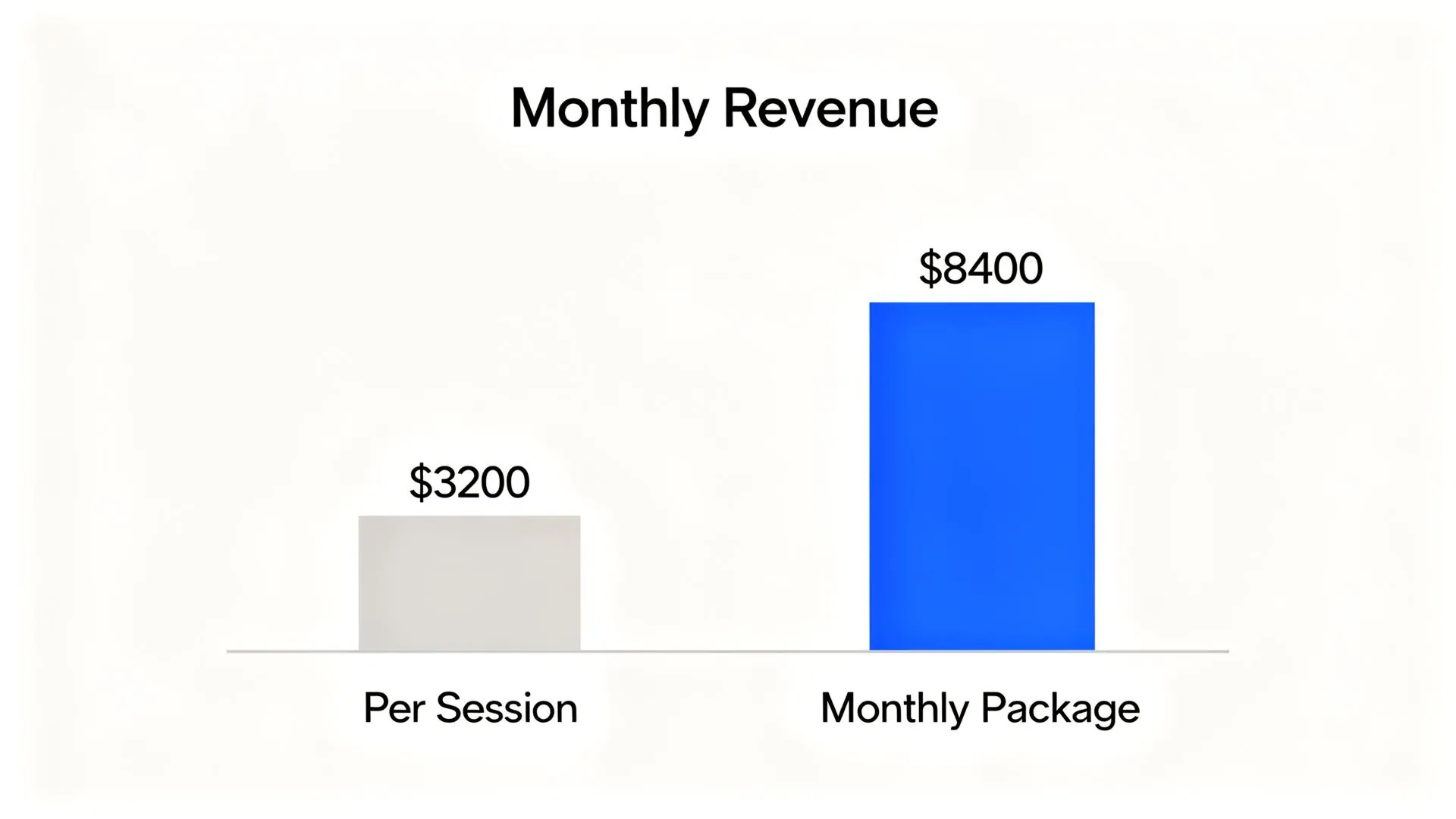
If you charge per session, you have a fundamental math problem that will never go away:
- There are only so many hours in a day
- Every cancellation or no-show is lost revenue you can never recover
- Your clients have zero commitment — they can ghost you anytime
- You're training them to see you as a commodity, not a transformation partner
This is the income ceiling we talk about. Per-session pricing guarantees you'll hit it.

The Value-Based Pricing Framework
Stop selling sessions. Start selling transformations. Here's the psychological shift:
"A client doesn't pay $60 for an hour of exercise. They pay $500 a month to lose 20 pounds, gain confidence, and fit into clothes they haven't worn in years. Price the outcome, not the hour."
Research from Harvard Business Review confirms that value-based pricing consistently outperforms cost-based pricing across every industry. Fitness is no exception.
Step 1: Calculate Your Minimum Viable Rate
Before setting prices, know your floor:
- List all monthly expenses (rent, insurance, software, food, car, savings)
- Add 30% for taxes
- Divide by realistic training hours per month (not 40 — realistically 20-25 billable hours/week)
This gives you the absolute minimum you can charge per hour and survive. Now triple it. That's closer to what you should actually charge.
Step 2: Build Your Tiered Package Structure
The most profitable trainers offer three tiers. This is backed by pricing psychology — the decoy effect naturally pushes buyers toward the middle option.
| Tier | What's Included | Monthly Price | Your Margin |
|---|---|---|---|
| Bronze (Entry) | App-based programming + weekly check-in + community access | $97-$197 | 90%+ (mostly passive) |
| Silver (Core) | 2x/week sessions + custom programming + nutrition guidance + accountability texts | $397-$597 | 65-75% |
| Gold (Premium) | 4x/week sessions + meal plans + 24/7 messaging + monthly assessments | $797-$1,500 | 50-60% |
Notice something? The Bronze tier requires almost none of your direct time but still generates revenue. This is how you break the time-for-money trap.
Step 3: Anchor High, Sell Middle
Always present your Gold tier first in sales conversations. It sets the anchor. When someone sees $1,200/month first, $497/month suddenly feels like a bargain. This isn't manipulation — it's presenting options that let clients self-select based on their budget and commitment level.
How to Raise Your Prices Without Losing Clients
Already have clients at low rates? Here's how to transition:
- Grandfather existing clients at their current rate for 60-90 days
- Add value first — introduce nutrition coaching, check-in texts, or a client app before raising prices
- Communicate the change professionally: "Starting [date], my coaching programs are moving to a new structure that includes [added benefits]. Your investment will be $X/month."
- Accept some churn. You will lose some clients. That's okay. One client at $500/month replaces five at $100/month — and requires 80% less of your time.
The trainers in our Dynasty Weekend case studies often raise their prices 2-3x within the first month and see higher close rates because the positioning and systems match the premium price.
The Psychology of Premium Pricing
Here's a counterintuitive truth backed by behavioral economics: higher prices often lead to better client results. When someone invests $500/month, they show up. They follow the nutrition plan. They don't cancel. When someone pays $30/session, they treat it like a gym membership they can skip.
A study published in the Journal of Marketing Research found that people who paid more for a product perceived greater value and were more engaged with it. Pricing isn't just about revenue — it's about client commitment.
What to Do If Someone Says "That's Too Expensive"
This isn't an objection — it's a buying signal. It means they're interested but need help justifying the investment. Here's how to handle it:
- "Too expensive compared to what?" — This reveals their frame of reference
- Break it down: "$497/month is $16/day — less than your daily coffee run"
- Show the cost of inaction: "What has staying where you are cost you over the last year in energy, confidence, and health?"
- Offer the lower tier: "If the Gold isn't the right fit, our Silver program gives you [benefits] at $297/month"
For a complete framework on handling objections, check out our Objection Destroyer guide.
Stop Competing on Price. Start Competing on Value.
The trainers who charge $30/session and the trainers who charge $300/session often have the same certifications. The difference? Positioning, packaging, and systems.
You don't need more certifications to charge more. You need a clear niche, a compelling offer, professional systems, and the confidence to ask for what your transformation is worth.
Start With Your Business Plan → Use Our Free Template to Map Your Pricing Strategy
Ready to Build a Premium Fitness Brand in 48 Hours? Learn About Dynasty 2-Day Launch →