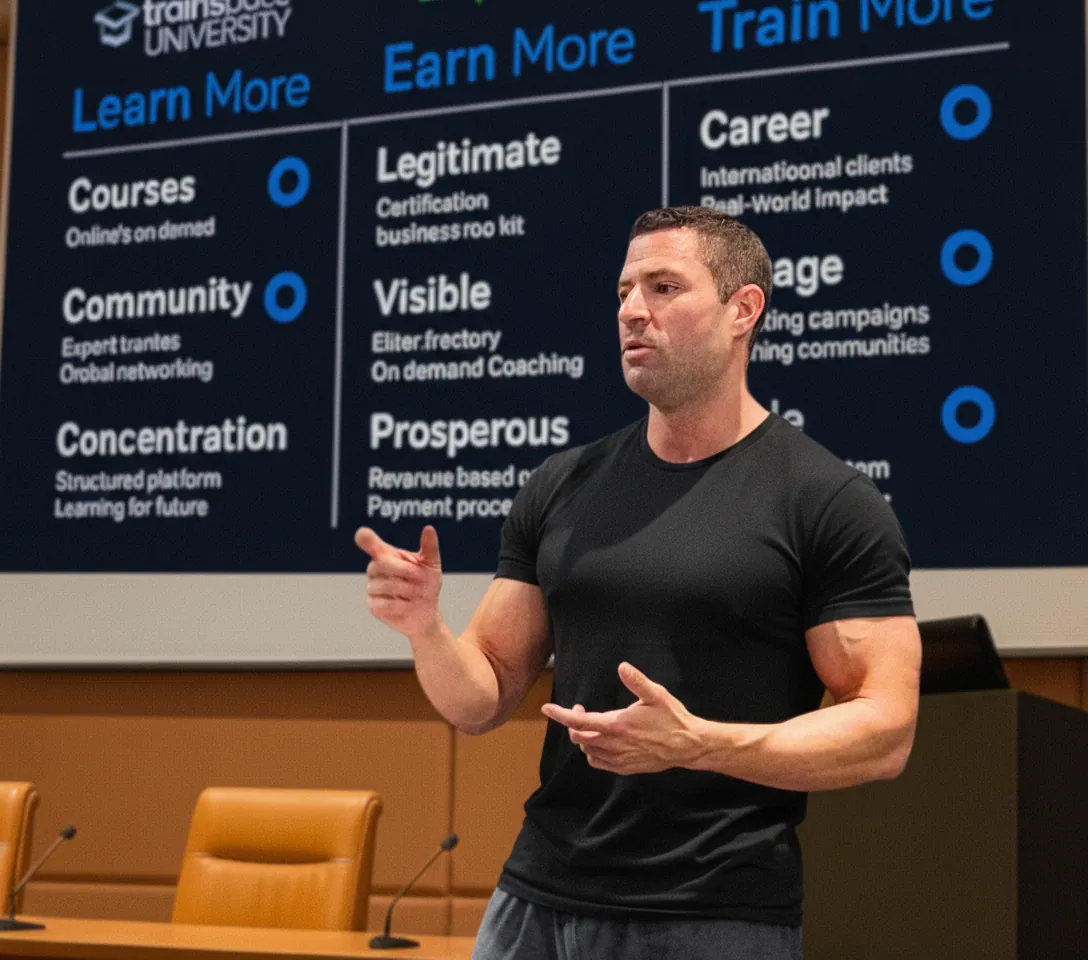

Why 80% of Personal Trainers Never Write a Business Plan
Let's start with an uncomfortable truth: according to the U.S. Small Business Administration, businesses with a written plan are 16% more likely to succeed than those without one. Yet in the fitness industry, the vast majority of trainers skip this step entirely.
Why? Because nobody taught us how. Certification programs teach anatomy and exercise science — not business strategy. So trainers launch with nothing but a dream and an Instagram account, then wonder why they're broke six months later.

Here's the good news: your business plan doesn't need to be a 50-page MBA thesis. It needs to answer seven critical questions. Let's walk through each one.
Section 1: Executive Summary — Your Business in 60 Seconds
This is a one-paragraph snapshot of your entire business. Write it last, but put it first. It should answer:
- What do you do? (e.g., "I help busy professionals lose weight through personalized online coaching programs")
- Who do you serve? (Your ideal client avatar)
- What makes you different? (Your unique mechanism or method)
- What's your revenue goal for year one?
Example: "FitForward Coaching provides 12-week online transformation programs for women aged 30-45 who want to lose 15-30 pounds without restrictive dieting. Using our proprietary Sustainable Strength Method, we project $120,000 in year-one revenue through a combination of 1-on-1 coaching and group programs."
Section 2: Target Market Analysis — Know Your Client Better Than They Know Themselves
This is where most trainers write "anyone who wants to get fit" and immediately lose. Your target market needs to be specific enough that your marketing speaks directly to one person.
According to IBISWorld, the U.S. gym and fitness industry is worth over $35 billion. You don't need a big slice — you need a specific slice.
Define Your Niche Using These Questions:
- Demographics: Age, gender, income level, location
- Psychographics: What keeps them up at night? What have they tried before?
- Pain points: What specific problem are you solving?
- Buying behavior: Where do they spend time online? What triggers them to buy?
We dive deep into this in our complete client avatar guide — it's one of the most important exercises you'll ever do for your business.
Section 3: Service Offerings & Pricing Strategy
This is where you map out exactly what you sell and how much you charge. Most trainers have one offer: "1-on-1 training, $X per session." That's a recipe for the income ceiling trap.
The 3-Tier Pricing Model
| Tier | Offer | Price Range | Scalability |
|---|---|---|---|
| Entry | Group coaching / digital program | $97-$297/mo | High (unlimited clients) |
| Core | Small group or semi-private | $297-$597/mo | Medium (8-15 per group) |
| Premium | 1-on-1 VIP coaching | $597-$1,500/mo | Low (limited spots) |
The key insight: your premium tier funds your lifestyle. Your entry tier builds your audience. Your core tier is where the business scales. Most successful trainers generate 60-70% of revenue from the core tier.
For a deep dive on pricing psychology, check out our guide on creating irresistible offers.
Section 4: Marketing Strategy — How Clients Find You
Your marketing plan needs to answer one question: Where will your next 10 clients come from?
If the answer is "I'll post on Instagram and hope," you don't have a strategy — you have a wish. Here are the three marketing channels that actually work for trainers:
Channel 1: Local SEO (Free, Long-Term)
Optimize your Google Business Profile and website so people searching "personal trainer near me" find you first. This is covered in detail in our complete local SEO guide.
Channel 2: Content Marketing (Free, Medium-Term)
Create valuable content that demonstrates your expertise. Blog posts, YouTube videos, and social media content that solves real problems. Our content strategy guide breaks this down step by step.
Channel 3: Referral Systems (Free, Immediate)
Build a systematic referral program. Don't just hope clients refer friends — create incentives and make it easy. According to Nielsen, 92% of consumers trust referrals from people they know over any other form of advertising.
Section 5: Financial Projections — The Numbers That Matter
You need to know three numbers cold:
- Startup costs: What do you need to invest before you earn a dollar? (Certification, insurance, website, equipment, software)
- Monthly expenses: Rent, software subscriptions, insurance, marketing budget, continuing education
- Break-even point: How many clients at what price point covers your expenses?
Sample Financial Projection (Year 1)
| Month | Clients | Revenue | Expenses | Profit |
|---|---|---|---|---|
| 1-3 | 5-8 | $2,000-$4,000/mo | $1,500/mo | $500-$2,500 |
| 4-6 | 10-15 | $5,000-$8,000/mo | $2,000/mo | $3,000-$6,000 |
| 7-12 | 15-25 | $8,000-$15,000/mo | $2,500/mo | $5,500-$12,500 |
These numbers aren't fantasy — they're achievable for trainers who build proper systems from day one.
Section 6: Operations Plan — The Daily Machine
How does your business actually run day-to-day? This covers:
- Scheduling system: How clients book sessions
- Communication: How you follow up, check in, and stay connected
- Content creation: When you create and post content
- Client onboarding: The process from "I'm interested" to "first session"
- Technology stack: CRM, website, email marketing, programming software
The trainers who build automated systems for these tasks are the ones who scale beyond the grind. The ones who do everything manually stay stuck.

Section 7: Growth Roadmap — Where You're Going
Map out your business in three phases:
- Launch (Months 1-3): Get your first 5-10 paying clients. Focus on delivering incredible results and collecting testimonials.
- Grow (Months 4-8): Scale to 15-20 clients. Add a group program. Build your email list and content machine.
- Scale (Months 9-12+): Systemize everything. Add passive income streams. Consider hiring. Target $10K+/month.
The One-Page Business Plan Template
You don't need a novel. You need clarity. Here's your template — fill it out in under an hour:
- My ideal client is: [Specific person description]
- Their biggest problem is: [Pain point]
- My solution is: [Your unique approach]
- I will charge: [3 pricing tiers]
- I will find clients through: [Top 3 channels]
- My monthly expenses are: [$X]
- I need [X] clients to break even
- My 12-month revenue goal is: [$X]
Print this out. Put it on your wall. Review it every single week. The trainers who do this don't just survive — they build dynasties.
Join TrainSpace University for Free → Get Weekly Live Coaching on Building Your Business