Personal Trainer Marketing in 2026: The 5 Channels That Still Actually Work
The number one reason personal trainers stay broke is not bad workouts or weak sales skills. It is marketing chaos. Posting on 6 platforms. Boosting random posts. Buying a course on TikTok ads. Trying Pinterest for two weeks then quitting. The result is always the same: tired, broke, invisible.
In 2026 the math is brutally simple. There are 5 marketing channels that still print clients for a personal trainer, and one trainer can run all of them in roughly 6 hours per week. Anything outside this list is a distraction. Pick this stack, run it for 90 days, and your calendar fills.
The Marketing Reality for Personal Trainers in 2026
Three things changed in the last 24 months that broke most old playbooks.
- Organic social reach collapsed. Average Instagram reach on a small account is under 5 percent of followers. TikTok is the only platform still giving brand new accounts free reach.
- AI search ate Google. A growing share of buyer searches end in an AI summary, not a click. The winners are local results and long-form expert content that AI cites.
- Cost per lead doubled. Paid ads work, but the cost per acquired client through Meta ads jumped from $80 to $180 in most fitness niches.
The trainers winning right now are not the ones spending more. They are the ones doing less, in the right 5 places.
Channel #1: Google Business Profile (The Most Underused Free Lead Source)
If you serve clients in person or even hybrid in one city, Google Business Profile is the highest ROI marketing asset on the planet. It is free, it ranks on local Maps and AI search, and it produces inbound calls and texts from buyers who already decided they want a trainer.
The 30 minute setup that beats 95 percent of competing trainers.
- Claim or create your profile. Pick "Personal Trainer" as the primary category.
- Service radius: 10 to 15 miles. Add 5 to 8 service area cities.
- Add 20 photos: gym, you coaching, smiling clients (with permission), before/after, equipment.
- Post one update per week. Treat it like a mini blog.
- Ask every happy client for a Google review with a direct link. Aim for 25 in 90 days.
For the deeper review playbook, see how trainers ethically stack Google reviews. A trainer with 50 to 100 five-star Google reviews in a city will out-rank a chain gym for "personal trainer near me" inside 6 months. That is real, recurring, free demand.
Channel #2: Short-Form Video (Reels, TikTok, Shorts)
Short-form video is the only place a brand new fitness account still gets free reach in 2026. The algorithm does not care if you have 50 followers or 50,000. If the first 3 seconds hook a viewer, it gets shown.
The simple weekly rhythm.
- 3 posts per week. 30 to 60 seconds each, vertical, captions burned in.
- One topic per video. Stop the cute "5 things in 30 seconds" format. Make ONE strong point.
- Post the same video to Reels, TikTok, and YouTube Shorts. Three platforms, one upload session.
- Always end with a soft CTA. "Comment WORKOUT and I'll send you my 4-week home program."
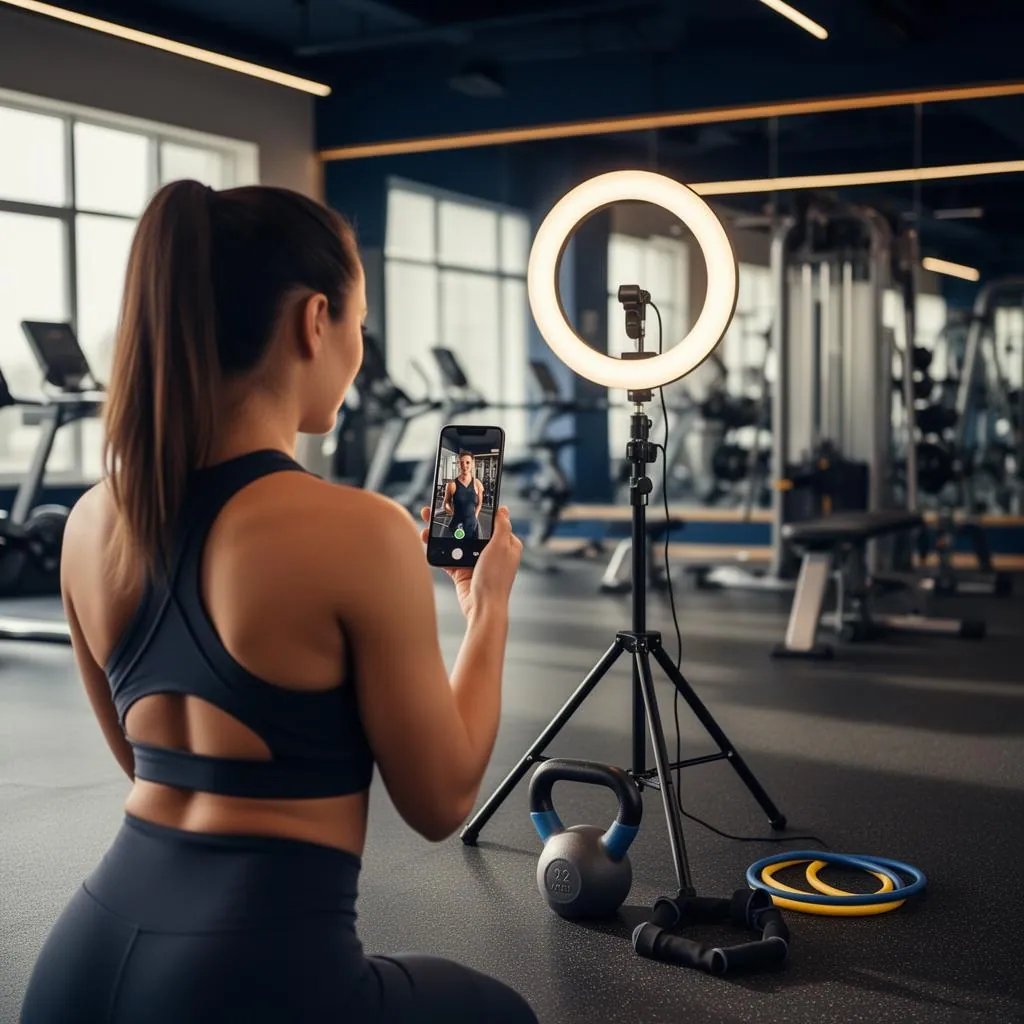
Batch all 9 videos in one 90 minute filming block on Monday. Edit in CapCut (free). Schedule them out. Total weekly time: under 3 hours. The 3 videos a week add up to roughly 12 videos a month, which is enough volume to find your winners. One winner per month builds a real audience inside 12 months.
Channel #3: A Weekly Email to Past and Current Clients
Email is the single most ignored, highest-ROI channel for trainers. It costs almost nothing, it does not depend on an algorithm, and it sells to the people most likely to buy: your past and current clients.
The minimum viable trainer email setup.
- Use one tool (Beehiiv, ConvertKit, or MailerLite all have free tiers).
- Send one email every Sunday. Short. 150 to 300 words.
- Format: a quick story, one lesson, one CTA.
- Soft pitch once a month for your next program, challenge, or open coaching slot.
The math. A list of 200 past and current clients with a 35 percent open rate and a 2 percent monthly buy rate produces roughly 4 paid actions a month. At $300 to $1,500 each, that is $1,200 to $6,000 in monthly revenue from one weekly email. Most trainers leave this entire channel on the table because they "are not writers." You do not need to be a writer. You need to be honest and consistent.
For a full email build-out, including the welcome sequence, see the email marketing playbook for personal trainers.
Channel #4: A Real Referral System (Not "Tell Your Friends")
Referrals are the highest closing percent and lowest cost of any channel. The problem is most trainers do not have a referral system. They have a hope.
A real referral system has 3 parts.
- A clear ask. At a known milestone (week 6, after a PR, after a transformation photo) say: "I am only taking 2 new clients this month. Who in your life would I be a great fit for?"
- A real reward. Free month, $200 credit, free private session, or merch. Not "$25 off your next session." Make it worth their effort.
- An easy share asset. A pre-written text the client can copy paste, plus a simple link to your booking page.
One referral conversation per week with an existing client produces 2 to 4 new clients per quarter on average. That is your single highest leverage hour of the week. For the full referral build-out see building a personal trainer referral program that actually runs.
Channel #5: One Long-Form Piece of Weekly Content
The last channel is the one most trainers skip because it does not give an instant dopamine hit. One long-form piece of content per week. A YouTube video, a blog post, or a 1,200 word newsletter.
Why long-form matters in 2026.
- AI search engines cite long-form content, not 30-second Reels. ChatGPT, Perplexity, and Google AI Overviews quote substantive expert pages.
- YouTube is the second largest search engine. A single video that ranks for "best home workout for busy moms" can deliver leads for 3 years.
- It feeds every other channel. One long-form piece becomes 5 to 8 short-form clips, 1 email, and 3 Google Business updates.

Time investment: 2 hours per week to film a 10 minute video or draft a 1,200 word post. The same answer that takes 90 seconds to record once gets discovered by buyers for the next 24 months. This is the only marketing asset that gets more valuable while you sleep.
The Total Weekly Time Budget (6 Hours)
Here is the entire stack in one weekly calendar.
- Monday (90 min): Batch film 9 short-form videos. Post 3 to Reels, TikTok, Shorts.
- Tuesday (60 min): Record or write one long-form piece (YouTube or blog).
- Wednesday (30 min): Update Google Business Profile post and reply to all reviews.
- Thursday (30 min): One referral conversation with a current client.
- Friday (30 min): Schedule next week's short-form content.
- Sunday (60 min): Write and send the weekly email.
Total: 6 hours per week. That is the entire marketing operation for a 6-figure personal training business in 2026.
What to Stop Doing Right Now
The things most trainers waste time on that almost never produce paying clients in 2026.
- Facebook Group posting in random fitness groups.
- Boosted Instagram posts under $20.
- Pinterest (unless you sell digital products like ebooks).
- Cold DMs at scale (gets you banned fast).
- Random "branding" projects like new logos, new colors, new website redesigns. Done is better than perfect.
- Buying followers or engagement pods. Algorithms now penalize this.
The 90-Day Rule
Run the full 5-channel stack for 90 straight days before judging it. Most trainers quit at week 3 because they post 4 Reels, see no clients, and assume it does not work. Marketing is not magic, it is compounding. The first 30 days build content inventory. Days 30 to 60 build audience momentum. Days 60 to 90 turn into inbound leads and signed clients.
Track exactly 3 numbers each week.
- Leads (any new person who hand-raised: a DM, an email reply, a booked call).
- Sales calls booked.
- New paid clients signed.
If those 3 numbers grow week over week, you are winning, even if the dopamine hits are slow. That is the entire game.
The Bottom Line for Personal Trainer Marketing in 2026
You do not need a $500 a month marketing agency, 14 platforms, or a content team. You need 5 channels, 6 hours a week, and 90 days of relentless consistency. Google Business Profile, short-form video, weekly email, a real referral system, and one long-form weekly piece. Run this stack, ignore everything else, and you will out-grow 90 percent of trainers in your city inside one year.
Related Reading
- Email Marketing for Personal Trainers
- Google Reviews Strategy for Personal Trainers
- Short-Form Video for Personal Trainers
- Building a Personal Trainer Referral Program
- Online Personal Training: $10K/Month Remote Coaching
- Corporate Wellness B2B Contracts
For broader industry trend data, the ACSM Worldwide Fitness Trends survey and the IHRSA Global Health Club Report are the two most credible annual sources on where fitness consumers are spending money and attention.